
4 Small Woodworking Projects That Could Become Your Next Best Sellers

If you've followed my Smalls That Sell series, you know I'm always looking for woodworking projects that make me stop and think.
I'm not looking for the biggest or most complicated woodworking projects. I'm looking for products that people are already interested in buying—and then trying to figure out what makes them appealing. Is it useful? Is it different? Can we build it without spending a fortune on materials? Can we make several versions from the same basic design?
Most importantly, does it make sense to add it to the things we're already selling?
I've got four projects today that I think are worth taking a closer look at: a house-shaped wall shelf, a cutting board display rack, a primitive single-drawer cupboard, and a large farmhouse wooden stool.
Let's talk about what makes each one interesting and why you might want to add your own version to your selling collection.
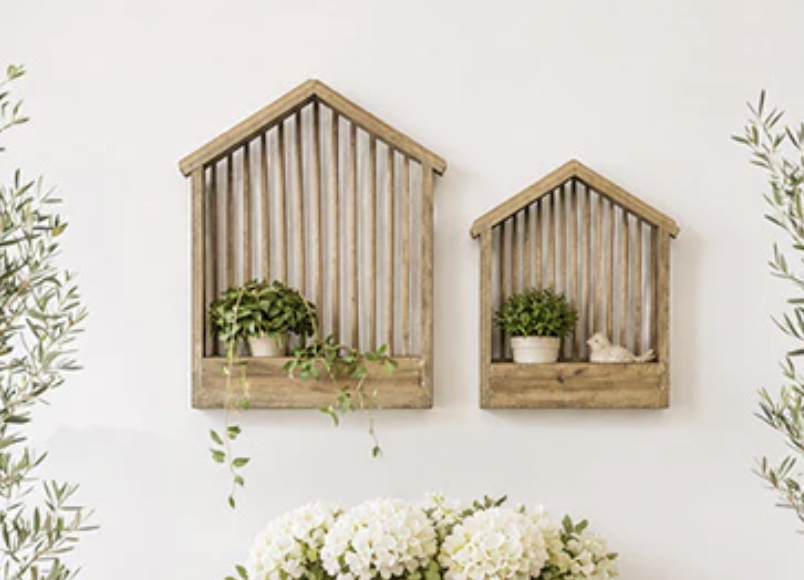
Project 1: House-Shaped Wall Shelves
The first thing that caught my attention about these house-shaped shelves is pretty simple.
They're different.
There are a million wooden shelves out there. This doesn't immediately look like every other one of them. The store is advertising these as wall shelves, but I don't think that's really what makes them interesting.
You can hang one on the wall. You can set it on a table. You can put it on a mantel. You can fill it with decorations. That gives the customer options, and options are always good.
The retail example I found is already listed as a best seller, with a set of two selling for around $43. More importantly, I estimate that both pieces could potentially be made from little more than a fence picket and some dowel rod…that’s a great profit margin.
The Real Opportunity Is Seasonal
This is what really got my attention. The version I found was staged for spring or summer. But forget about how they staged it for a second.
Picture the exact same thing completely white and decorated for Christmas.
Now we've got a Christmas product. What about natural wood with orange, brown, and cream decorations? There's your fall version. Whitewashed wood with natural dowels? Farmhouse. Black frame with natural dowels? Modern.
You haven't redesigned anything. You're simply changing the finish and the way you present it. That's huge if you're trying to build inventory efficiently. Instead of developing five different products for five different seasons or decorating styles, you can develop one product and create five versions of it.
Why I'd Add These to a Selling Collection
There are several things working in our favor:
Low material cost. The basic design uses narrow material and dowel rods.
Easy to batch. Once you've figured out your angles and sizes, there's no reason to make these one at a time.
Small and lightweight. That's always nice when you're hauling inventory to shows or trying to store finished products.
Multiple uses. Customers can hang them or use them as freestanding décor. Adding an inexpensive sawtooth hanger gives them both options.
But that seasonal potential is what would convince me to try these.I'd build several at once, finish them differently, and see what my customers respond to. You might find that one little wooden house turns into something you can sell all year.
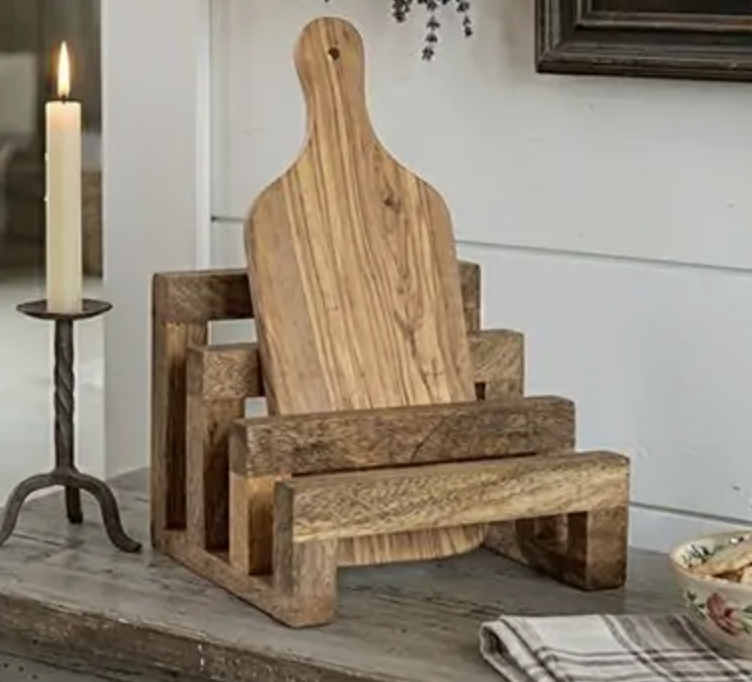
Project 2: Cutting Board Display Rack
This next one is interesting for a completely different reason.
The cutting board display rack isn't necessarily some massive trend by itself. It's an accessory to something that is. Cutting boards have been popular forever. And think about what happens after somebody buys two, three, or four nice cutting boards. Where do they put them? If you're like me, they're probably stacked somewhere or shoved inside a cabinet.
This little rack solves that problem.
And whenever I find a woodworking project that makes me think, I could actually use that in my own house, I start paying attention. That's exactly what caught my attention about this one.
This Could Be a Great Scrap-Wood Product
Another thing I like about this project is how little material it requires. The retail design is only about 6" × 6" × 7"
Most of the structure consists of small strips approximately 1 inch square. If you're already making cutting boards or other hardwood projects, think about the scraps you've probably got sitting around your shop.
Walnut
Maple
Cherry
Oak
Those little pieces that are too good to throw away but aren't quite big enough for another project? This is the kind of build they could become.Now we're potentially turning scrap into inventory. That's something I'm always interested in.
Don't Just Sell the Rack
Here's where I'd take this idea one step further.
If you're already selling cutting boards, don't look at this as a separate product. Look at it as an upsell. Somebody buys one of your cutting boards:
"Would you like the matching display rack?"
Or make a complete package: Three cutting boards + matching hardwood display rack.
Now you're not necessarily looking for another customer, you're increasing the value of the customer you've already got.
The store-bought rack I found was around $36, but I suggest producing them efficiently and selling around the $25 range, depending on materials and market. Whether that's the right price in your area is something you'll have to determine. But the bigger lesson isn't the exact price, it's the strategy.
Find accessories for products people are already buying.
That's a category I'd be paying attention to.
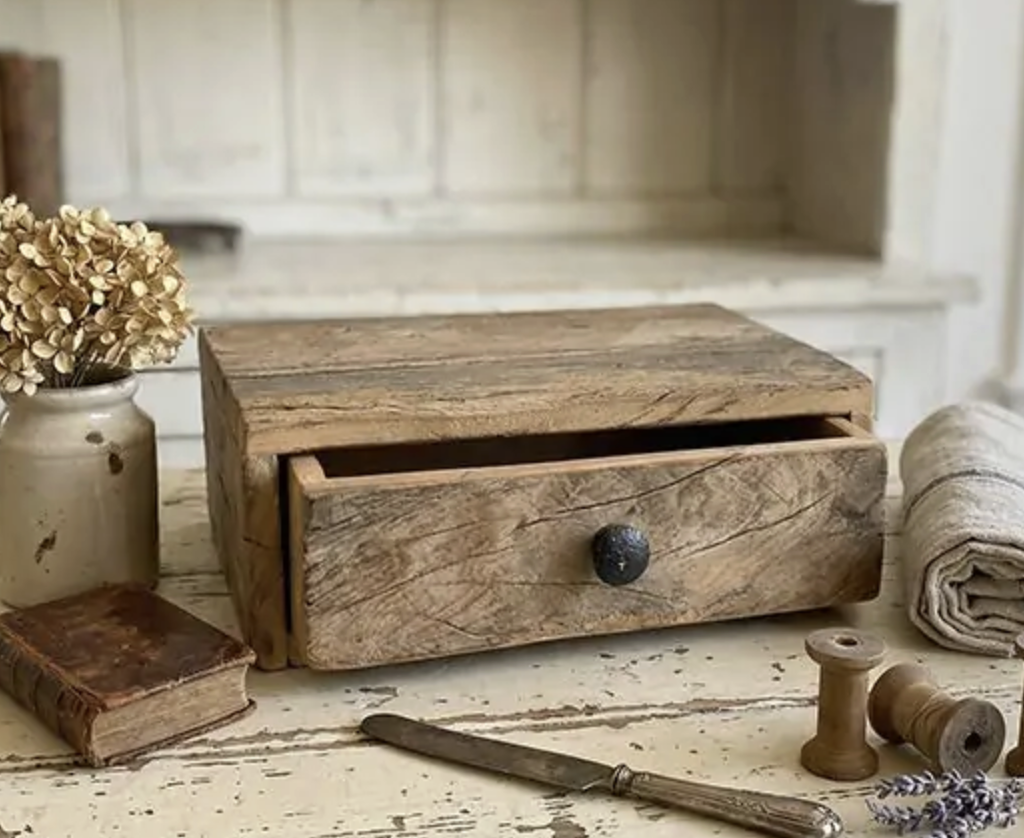
Project #3: Primitive Single-Drawer Cupboard
This one might be my favorite from a marketing standpoint.
Because when you really break it down, what are we looking at? It's a drawer inside a box. There's nothing revolutionary about that. But give it some reclaimed wood, an old primitive finish, and a simple black knob, and suddenly it has character.
The store-bought version is priced around $50, but I estimate that, depending on your material source, you could potentially have less than $5 invested in the materials and hardware.
Now you've got my attention.
The Material Is What Makes This One Work
I wouldn't try to make this thing perfect…that's not the point. If you've got pallet wood, reclaimed lumber, weathered boards, or scraps that already have some character, this is exactly where I'd use them. Mix board widths. Leave some imperfections. Distress new material if that's what you've got.
The primitive appearance is part of the product. That also gives us another advantage, every one doesn't have to look identical. In fact, slight differences can make them feel more handmade.
Here's Where I Think People Get Selling Wrong
You could put one of these on a table at a craft show with a price tag on it and people might walk right past it. Why? Because they don't know what they're supposed to do with it. So show them.
The first thing that popped into my mind was a coffee station. Put a single-serve coffee maker on top and fill the drawer with coffee pods. Now the customer doesn't see:
Little wooden drawer — $XX
They see:
"Oh! I could put that beside my coffee maker."
That's completely different. And we don't have to stop there. Stage another one with tea. Use another for kitchen accessories. Put one on a desk with office supplies. Use one in a bathroom.
You haven't changed the product, you've changed the reason to buy it.
Why I'd Add These to a Selling Collection
This project has a lot going for it:
Potentially very low material cost
Great use for reclaimed lumber
Small enough to batch-build
Easy to create multiple finishes
Useful rather than purely decorative
Multiple ways to market the exact same product
But the real selling opportunity is staging. Don't make your customers imagine what they could do with something. Show them! That lesson applies to a whole lot more than this little cupboard.
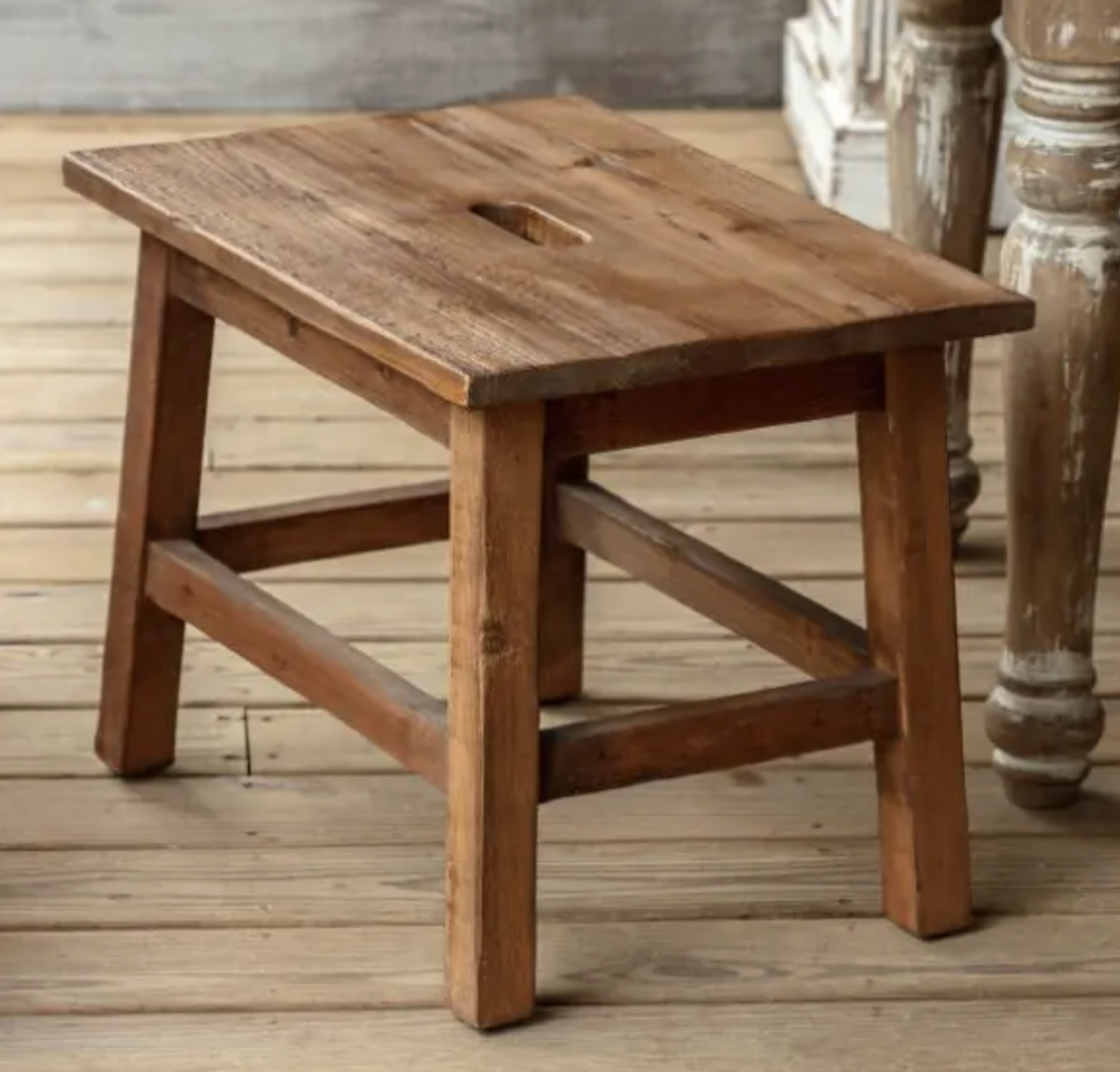
Project 4: Large Farmhouse Wooden Stool
Now we're getting into something a little larger. And I like this one because it solves an actual problem. Unless you're about 6'5", you've probably got something sitting on a shelf somewhere that you can't reach.
So what do most people have? An ugly plastic or metal step stool that gets shoved into a closet. But what if the stool looked good enough that you didn't have to hide it? That's the opportunity here.
The farmhouse stool I found is approximately 24 inches wide, 17 inches deep, and 18 inches tall. It's large enough to be genuinely useful while also being substantial enough to serve as décor or a small display surface. That's what separates this from a cheap plastic step stool.
People Aren't Just Buying a Stool
They're buying something that can stay in the room.
Put it in a kitchen. Put it in a mudroom. Use it as a plant stand. Set decorations on it. Then when somebody needs to reach the top shelf, they've got a stool sitting right there.
Useful + attractive is a powerful combination.
And you can make this thing fit completely different homes just by changing the materials and finish. A rustic stained version looks completely different from a black base + natural hardwood top. And that looks completely different from white base + stained top. Same basic product. Different customer.
Spend Your Material Money Where Customers Can See It
This is another selling lesson I really like from this project.
If you're painting the base, I recommend using an inexpensive material such as pine rather than painting over expensive hardwood. Then put your money into the top.
A hardwood top immediately gives the piece a more premium appearance. That's a smart way to think when you're building to sell. Don't spend extra money somewhere the customer can't appreciate it. Spend it where it adds perceived value.
What About the Price?
The retail version I found was listed at $392.
I'm not telling you to start building stools and slap a $392 price tag on them. Depending on the materials, something around $80–$100 would be a more realistic range to explore. But ultimately, your market will determine your price.
But compared with our other projects, this one gives you something important, a higher-ticket item. That's another reason I'd consider adding it to a selling collection. Not everybody who walks into your booth or visits your page needs to see twenty $20 products. Give them some bigger options too.
Ready To Build?
If you're trying to make money with woodworking, don't just walk into your shop and build whatever sounds fun that morning. Start thinking about your products as a collection. You need different reasons for people to buy.
The house-shaped shelf gives you a seasonal décor product. The cutting board rack gives you an accessory and upsell product. The primitive drawer gives you a low-cost functional product that can be marketed several different ways. And the farmhouse stool gives you a larger, higher-value functional piece. Now we're starting to build an actual product lineup.
And I'd take it one step further. Pay attention to what your customers tell you. If the white Christmas version of the house shelf outsells everything else, make more. If customers keep buying cutting board racks with your cutting boards, create bundles. If everybody picks up the little primitive cupboard after seeing it staged as a coffee station, lean into that. If your two-tone farmhouse stool gets all the attention, build another.
You don't have to guess forever.
Let your customers tell you what to make next.
That's really what Smalls That Sell is all about.
Look at what's already catching people's attention. Figure out why it works. Then take that idea back to your shop and put your own spin on it. You don't need to copy exactly what somebody else is doing. You need to understand the opportunity. And then there's only one way to find out if you've got your next best seller.
👉 Get up, get out, and get your build on.
Whether you’re new to woodworking or a seasoned pro, this project offers the perfect mix of functionality and creativity. Below I have the YouTube video linked for a step-by-step video tutorial for you to follow along with. If you’re a more “plans in the hand” person, click “Get Plan” down below for downloadable instructions. And if you’re ready to dive deeper into woodworking, check out my new course, “Woodworking Kickstart” (which is also linked below). It’s packed with step-by-step lessons to help you build confidence and skills, whether you’re a total beginner or an experienced DIYer. You’ll be building with confidence in no time.
Remember, creativity doesn’t have to be expensive; all you need is a little inspiration and a willingness to try.
Get Easy Step-By-Step Directions to build this by clicking the button below
⭐ 10,044 5 Star Reviews
📚 113 Plans to Choose From
🧩 Lego-Like Assembly Steps
📏 Exact Measurements
📋 Detailed cut and part list
🔍 X-Ray Views
🚀 Instant Delivery
